What does fantastical mean, and why a calendar uses it
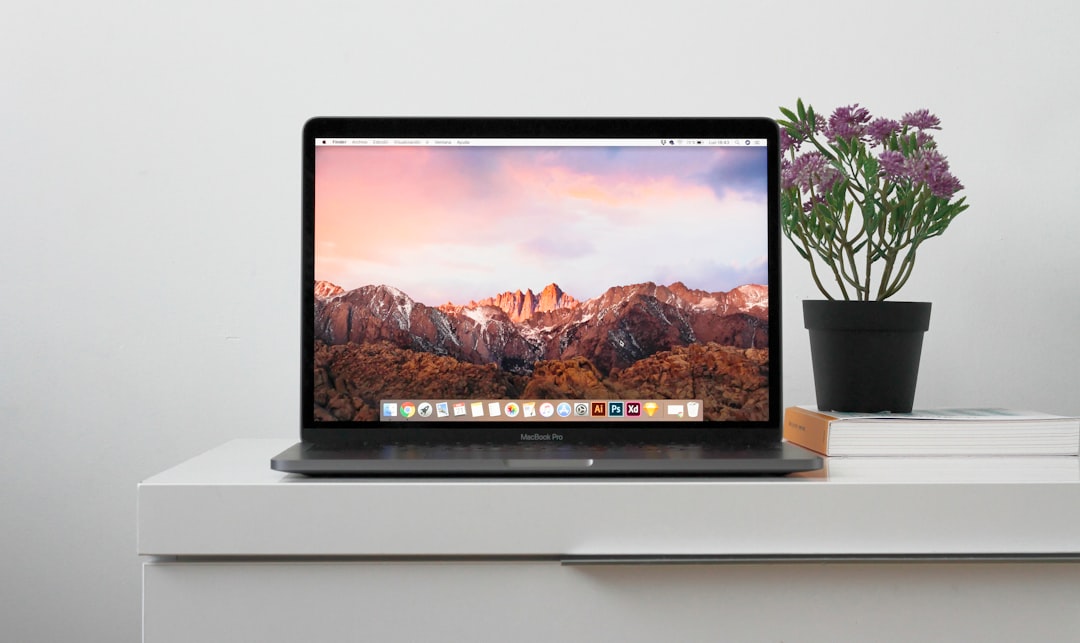
Two different people type these three words into a search box. One has just hit the word in a novel or a review and wants the dictionary answer. The other has seen it as the name of a Mac calendar app, is halfway through deciding whether to install it, and wants to know what the name is claiming. The dictionary answer takes one paragraph. The second question is the one that costs money to get wrong, so most of what follows deals with it.
The word, and the three senses it carries
Fantastical is an adjective built on fantasy. It describes something that belongs to the imagination rather than to the world, and it runs across three senses that overlap in practice.
The first and most common sense is existing only in the imagination. A fantastical creature is one that does not exist. A fantastical account of an evening is one that did not happen the way it was told. Nothing in this sense is a compliment or an insult by itself. It is a statement about where the thing lives.
The second sense is closer to design than to truth: extravagantly odd, elaborate beyond what the purpose needs. A building can be called fantastical when its shape has clearly outrun its function. Here the word carries a faint edge, admiring and sceptical at the same time.
The third sense is informal and now uncommon: excellent, remarkable. This is the sense that "fantastic" absorbed almost entirely, which is why it sounds slightly old-fashioned when "fantastical" is used this way.
The etymology explains the spread. The word arrives in English through Old French and Late Latin from a Greek root meaning to make visible, to produce a mental image. Fantasy, phantom, and the shortened form fancy all come from the same place. That shared root is why the word never fully means "false" and never fully means "great". It means: produced by the mind.
Fantastic and fantastical are no longer interchangeable
The two forms started as variants of one word and have drifted apart. Ordinary current usage separates them cleanly enough that swapping one for the other changes the sentence.
| Everyday meaning now | Typical use | |
|---|---|---|
| fantastic | excellent, very good | "The team did a fantastic job." |
| fantastical | of or belonging to fantasy | "A fantastical version of medieval Europe." |
"A fantastic schedule" is a compliment. "A fantastical schedule" is a diagnosis: a plan that only works in the imagination. That second phrase is worth holding on to, because it names something a lot of calendars quietly become.
Both forms take the adverb "fantastically", which keeps the older ambiguity. "Fantastically detailed" can be praise or complaint depending on the sentence around it.
The noun forms diverge too. Fantasy is the genre and the mental faculty. A fantasia is a musical form. Neither has a matching noun built directly from fantastical, which is part of why the adjective stayed available for a product name: it was not already booked by an industry.
Where the word actually appears in print
Outside dictionaries, the word clusters in three places, and seeing them makes the sense easier to hold.
Literary criticism uses it for work that breaks the rules of the observable world without necessarily being genre fantasy. A novel set in a recognisable city where one impossible thing happens tends to get called fantastical rather than fantasy, because the label describes the texture rather than the shelf. Art and architecture writing uses it for design that has escaped its brief, which is where the second sense lives. Journalism uses it for claims: a fantastical explanation is one nobody in the room believes.
What ties the three together is that the word always points at the gap between a description and reality. It never describes the reality itself. That is exactly why it works on a schedule and does not work on a person.
Why the word turns up next to calendar software
A calendar app for Mac has carried this name for years, which is why the search term shows up on machines running macOS rather than in dictionaries alone. The name reads as a blend: the everyday praise word, with the "cal" of calendar landing at the end. Software naming does this constantly. It is a pun, not a claim about features.
That distinction matters more than it sounds. A name is chosen once, early, usually before most of a product exists, and it never updates when the product changes. Pricing changes. System requirements change. Whole features move from a free tier into a paid one. The name stays fixed through all of it, which makes it the single worst piece of evidence available about what a piece of software currently does.
The same trick shows up across the category, which is worth noticing before treating any of it as information. Calendar software names tend to be a real word with the "cal" of calendar welded on, or a time related noun, or a number. None of them describe behaviour. A person choosing between three of them on the strength of the names is choosing between three puns.
Anyone who arrived at this word from a download page has already done the useful part by pausing. The next step is not to decode the name. It is to check the four things that actually differ between Mac calendars, none of which any name has ever encoded.
The four things a name cannot tell you
These are the points where calendars for macOS genuinely diverge, and each one has a factual answer that can be checked before installing anything.
How it is sold. Some Mac calendars are a purchased licence with paid upgrades at major versions. Some are free downloads with a recurring subscription holding the useful half. Some are free and open source. The difference is not the monthly figure, it is what happens when payment stops: a licensed app keeps running, a lapsed subscription takes features back. Vendor pricing pages are the only reliable source here, because every one of these companies has changed its terms at some point.
What macOS version it needs. A calendar with a floor of macOS 12 or later is unavailable on an older Mac no matter how good the reviews are. This is published, and it is the fastest way to cut a shortlist down.
What it syncs with. Nearly every Mac calendar reads the same accounts through the same servers, so the events themselves are rarely the differentiator. What differs is the handling of edge cases: subscribed ICS feeds from Microsoft are read only, invitations from external organisers behave differently per app, and a calendar that shows a duplicate for every Google event is doing so because of how the accounts were added, not because of the app's name.
Where events come from. This is the one that changes a working day. Typing a full sentence and having it split into a title, a time, a location, and an alert is faster than filling a form, and every serious Mac calendar now does some version of it. The gap appears on compound sentences, where a weaker parser leaves half the sentence sitting in the title. A short comparison of how the current options handle this sits on the Compared with other calendars page.
A fifth question only shows up after installation, and no name or feature list covers it: what the app does when the connection drops. Some calendars keep a full local copy and reconcile later. Some show an empty grid until the account answers. On a laptop that spends time on trains and in buildings with thick walls, that difference decides whether the calendar gets trusted or checked twice. It is worth ten seconds of testing with the network switched off, and it is the sort of thing that never reaches a comparison table.
The other reason the word fits a calendar
There is a version of this word that describes a schedule rather than a product, and it is not flattering.
A schedule is fantastical when it only holds together if nothing takes longer than its block. Four meetings booked back to back at the top of each hour, in different buildings, with no gap for getting between them. A day where the two hours of actual work sit in the only slot that also contains lunch. A week where every recurring commitment was accepted individually and the total was never added up. None of these are visible in a month view. All of them are visible the moment travel and transitions get entered as events instead of assumed.
The test is cheap. Take last week, open it in a day or week view, and add the real time spent moving between the things already on it. Ten minutes to walk somewhere. Five minutes to join a call and wait for the host. Twenty minutes to get across a city. If the week no longer fits inside the week, the calendar was describing an imagined version of it. That is the literal, dictionary sense of the word applied to a working schedule.
There is a second, quieter version of the same problem. Recurring commitments are agreed one at a time, months apart, and each one looks small on the day it is accepted. A weekly thirty minute check in costs twenty six hours a year. Three of them cost most of a working fortnight. Nothing in a calendar ever presents that total, because the grid shows a week at a time and the arithmetic happens across a year. Anyone whose week feels full without any single item looking unreasonable is usually looking at this, not at overbooking.
Some calendars will do this arithmetic rather than leaving it to the person. Attaching a travel time to an event reserves the block before it and moves the alert to a departure time instead of a start time, which turns a hidden assumption into something visible on the grid. The Travel time page shows what the entry looks like in practice.
Using the word correctly
For anyone who came for the language rather than the software, a few patterns cover almost all correct use.
It is nearly always attributive, sitting before a noun: a fantastical story, fantastical architecture, a fantastical claim. It reads awkwardly after a linking verb, where "fantastic" is the natural choice. It applies comfortably to plans, accounts, creatures, designs, and landscapes. It applies poorly to people. Calling a person fantastical suggests they are imaginary rather than impressive.
Pronunciation follows the stress of fantastic, on the second syllable, with the ending unstressed. British and American usage do not differ on the meaning. In writing it is more common in the United Kingdom than in the United States, where "fantastic" has taken over more ground.
It is also gently negative in most business contexts. Describing a forecast as fantastical says the numbers came from an imagination. Describing a schedule the same way says the same thing about the time. That is a useful piece of vocabulary to have available, because there is no other single English word that says a plan is internally consistent and still impossible.
What to change first
The dictionary question is answered in a line: it means belonging to fantasy, imagined rather than real. The scheduling question takes one week. Add real travel and transition time to five days of an existing calendar, look at what no longer fits, and decide whether the fix is fewer commitments or a tool that does the arithmetic automatically. If it turns out to be the second, Caltimate is built around entering that kind of detail by speaking or typing a sentence rather than filling in a form.
Frequently asked questions
Is fantastical a real word, or a made up product name?
It is a real English adjective and considerably older than any software. It means belonging to fantasy, imagined rather than real, and it has been in use in English since the late medieval period through Old French and Latin from a Greek root meaning to produce a mental image. A Mac calendar app later took it as a name because it puns on the "cal" of calendar.
What is the difference between fantastic and fantastical?
In current usage, fantastic means excellent and fantastical means belonging to fantasy. They began as variants of the same word and split over time. Calling a plan fantastic is praise. Calling the same plan fantastical says it only works in the imagination.
Can fantastical be used as a compliment?
Rarely, and only in specific contexts. Describing a novel, a costume, or a piece of architecture as fantastical is usually admiring, because being imaginative is the point of those things. Applying it to a forecast, a budget, or a schedule is close to an accusation, because those are supposed to describe the real world.
Does the name tell you anything useful about the calendar app?
No. Product names are chosen once and never updated, while pricing model, minimum macOS version, and which features sit behind a subscription all change over time. Checking the vendor's current pricing page and system requirements takes two minutes and answers far more than the name does.
What makes a schedule fantastical rather than just busy?
A busy schedule is full but survives contact with a real day. A fantastical one depends on assumptions that are never written down: that nothing overruns, that moving between commitments takes no time, and that the gaps are enough. Entering travel and transition time as actual events is the quickest way to tell which one is on screen.